Anion Gap Calculator for Blood Test Interpretation
What the Anion Gap Is and Its Importance
The anion gap is a derived result from a blood test that aids in assessing the relationship between measured electrolytes in the bloodstream. It is frequently included in a blood chemistry panel or electrolyte panel and is used as a screening tool for acid-related problems. While the number itself is not a diagnosis, it can serve as an important diagnostic clue in evaluating a possible acid-base disorder.
At a practical level, the anion gap reflects the difference between positively charged and negatively charged particles in the blood. Because routine lab testing does not measure every ion, the gap helps estimate what is “left over” and whether an anion difference suggests an underlying cause such as excess acid production, kidney issues, or a protein imbalance. This is why the test has real clinical significance during patient evaluation for a metabolic disturbance.
The result is especially useful in understanding acid-base balance. A higher or lower-than-expected number can point toward conditions that need further investigation. The anion gap should always be interpreted as part of the broader blood chemistry picture, not as a stand-alone answer. The most useful interpretation comes from combining the calculated result with symptoms, other lab values, and the full clinical context.
How exactly an Anion Gap Calculator Works
An anion gap calculator relies on measured values from serum electrolytes, usually sodium, chloride, and bicarbonate, to produce a calculated value. In the conventional formula, the formula is:
Anion gap = sodium − (chloride + bicarbonate)
This calculation formula estimates the unmeasured ions in the blood. Sodium is the main measured cation, while chloride and bicarbonate are the key measured anions. Their relationship helps show whether the body is retaining acids or losing bicarbonate, both of which can alter acid-base balance.
The calculator is straightforward mathematically, but the interpretation is not always clear clinically. A normal-looking number may still require context if the patient has symptoms or an abnormal lab result elsewhere. Likewise, an abnormal result may be caused by shifts in electrolytes, changes in protein levels, or even a testing issue. That is why the calculator functions best as a quick first look at a possible acid-base disorder, not as a final diagnosis.
Some versions of the calculation also include an albumin correction. Because albumin carries a negative charge, lower albumin can make the anion gap appear lower than it really is. Correcting for albumin can increase the clinical significance of the result, especially when evaluating possible metabolic acidosis.
Normal Anion Gap Range and Reference Values
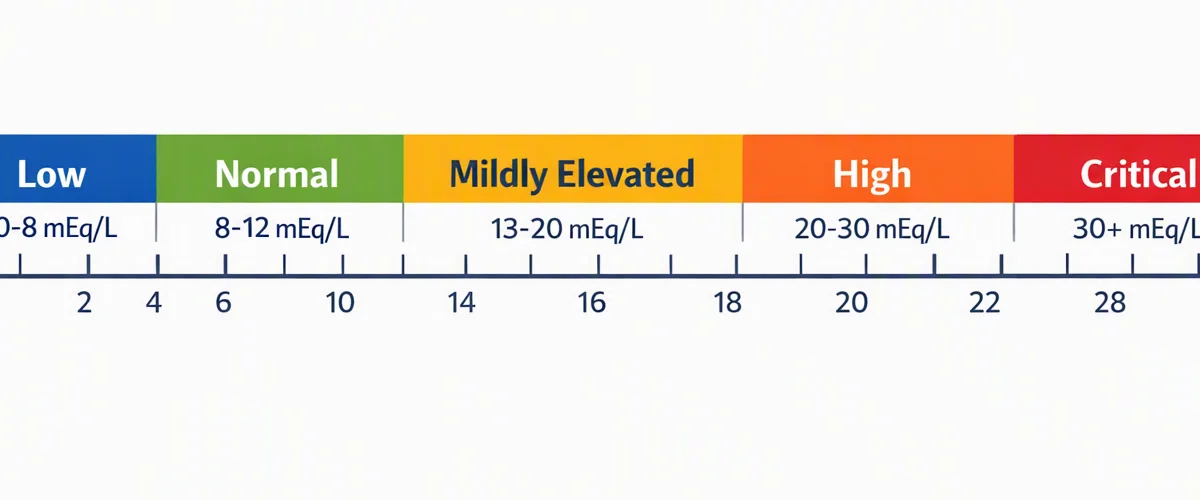
The expected range for anion gap depends on the testing facility and the measurement method. That is why the printed range on the report matters more than any single standard number. Different analyzers and local lab practices can create lab variation, so the same patient could appear normal in one setting and borderline in another.
In many cases, the reference lab range is slightly different depending on whether the calculation includes potassium. Most modern reports use sodium, chloride, and bicarbonate alone. Even then, the normal interval may vary by equipment, reagents, and lab methods. When reviewing a result, always compare it with the range printed on the report rather than assuming one fixed standard.
Albumin strongly influences the result because it is an unmeasured anion. If albumin is low, the anion gap may be lower than expected even when an acid load is present. This is one reason an albumin-adjusted calculation can be helpful in a more nuanced evaluation. In other words, the reference interval is not just a number; it is a clue that must be adjusted for the patient’s clinical state.
The best way to think about the normal range is this: the anion gap calculator helps identify whether the measured electrolytes fit the expected pattern. If the result is outside the expected range, the next step is to ask whether the cause is metabolic, protein-related, or analytic. That approach keeps the focus on clinical interpretation and not just arithmetic.
Elevated Anion Gap: Frequent Causes and Interpretation
A raised anion gap is commonly associated with metabolic acidosis, a condition in which acid accumulates in the body or bicarbonate is lost. This is a key use of the anion gap calculator because it can help identify a dangerous metabolic problem early. When the gap is elevated, the body has more unmeasured acids than expected, which changes the balance of serum electrolytes.
One major cause is lactic acidosis, which occurs when lactate rises anion gap potassium debate due to poor oxygen delivery, shock, severe illness, or impaired metabolism. Since lactate is an unmeasured anion, it can raise the anion gap significantly. Another common cause is ketoacidosis, which may occur in uncontrolled diabetes, prolonged fasting, alcohol-related illness, or other states of fat breakdown. In these cases, ketones accumulate and shift the acid-base picture.
Renal failure is another major cause of a high gap. When the kidneys cannot clear acids properly, unmeasured acids accumulate. This is especially relevant in patients with renal disease, where reduced filtration and impaired acid excretion can produce a persistent metabolic disturbance. In such cases, the anion gap becomes a useful diagnostic clue that the kidneys are not maintaining normal acid handling.
Other causes exist as well, but the practical question is usually whether the high value fits the clinical picture. A patient with vomiting, dehydration, altered breathing, confusion, or low blood pressure may need urgent evaluation. The anion gap calculator can reveal the problem, but the cause still requires differential diagnosis and correlation with the rest of the blood chemistry.
In summary, a high anion gap often points to an excess acid burden. The most common decision-making question is whether the likely cause is lactic acid accumulation, ketoacidosis, or reduced acid elimination from renal failure. From there, the next step is identifying severity, symptoms, and treatment urgency.
Decreased Anion Gap: Factors and Medical Importance
A low anion gap is less common, but it can still be important in practice. A common reason is hypoalbuminemia, because albumin is a negatively charged protein that contributes to the normal result. When albumin drops, the calculated value may also drop, even if the patient does not have a major acid-base problem. This is why albumin correction matters in practical interpretation.
An additional explanation is paraproteinemia, which can occur when abnormal proteins are present in the blood. A classic condition associated with this pattern is multiple myeloma, where excess positively charged proteins can reduce the anion gap. In these situations, the low result may be a clue to an underlying blood disorder rather than a primary electrolyte problem.
Laboratory error must also be considered. Because the anion gap is derived from multiple measured values, any issue affecting sodium, chloride, or bicarbonate can alter the final result. Repeating the test may be appropriate when the result does not fit the patient’s condition. A single unexpected number should never be accepted without checking for measurement issues, sample problems, or transcription errors.
A low result is not always benign, but it is often less urgent than a high one. Still, the pattern can matter a great deal when evaluating blood test abnormalities. If albumin is low, if there is concern for paraproteinemia, or if the lab result seems inconsistent, the anion gap becomes a meaningful diagnostic clue. In that sense, the clinical significance of a low value depends heavily on the overall patient evaluation.
How to Read an Anion Gap Result with Other Tests
Assessing the anion gap in isolation can be unhelpful. A better approach is to pair it with an arterial blood gas, the patient’s pH, and key lab markers such as lactate. These tests help determine whether the abnormal value is actually part of an acid-base disorder and whether the body is acidemic, alkalemic, or adjusting correctly.
If the anion gap is increased and the pH is low, that supports metabolic acidosis. If lactate is also high, lactic acidosis becomes more likely. If glucose or ketones are elevated, ketoacidosis rises on the differential diagnosis list. This step-by-step pattern recognition is where the anion gap calculator adds value as a screening tool rather than a stand-alone answer.
The osmolar gap is another useful comparison in specific cases. It can help evaluate possible ingestion of toxins or other substances that change serum osmolality. When both the anion gap and osmolar gap are abnormal, clinicians think more expansively about toxic or metabolic causes. When only one is changed, the pattern may point more clearly toward a specific underlying cause.
Albumin should also be checked. Since albumin affects the calculated value, low albumin can conceal a clinically important high gap. An albumin correction can uncover an elevation that might otherwise be missed. This makes the result more accurate and improves the interpretation of the blood chemistry panel as a whole.
Ultimately, the best interpretation combines the lab result with symptoms, physical findings, and the rest of the electrolyte panel. A single number is only one piece of the puzzle. The calculator helps arrange the data, but the real value comes from understanding how the number fits with pH, lactate, arterial blood gas findings, and the broader differential diagnosis.
When to Seek Medical Evaluation
A changed anion gap does not always mean emergency care is needed, but certain situations may require prompt attention. If there are worrisome symptoms such as confusion, severe weakness, rapid breathing, chest discomfort, vomiting, or fainting, medical evaluation should not be delayed. These signs can occur with significant metabolic acidosis or a different serious metabolic imbalance.
Emergency care is especially important if the abnormal result is accompanied by dehydration, very high glucose, possible infection, or suspected poisoning. Severe dehydration can worsen kidney function and lead to electrolyte imbalance. If the patient already has kidney disease, an abnormal anion gap may reflect impaired acid handling and warrants closer evaluation.
People with known diabetes, chronic kidney conditions, or recent severe illness should be evaluated quickly if the result is markedly abnormal or if symptoms are worsening. The anion gap calculator is helpful as an early screening tool, but it does not replace direct medical review. The key question is whether the blood test pattern aligns with the patient’s condition and whether treatment is needed now.
As a general rule, seek care urgently when an abnormal result occurs alongside worsening symptoms, mental status changes, breathing changes, or signs of severe fluid loss. Even without dramatic symptoms, persistent abnormalities may require follow-up testing and a broader workup. A thoughtful patient evaluation can determine the underlying cause before complications develop.
Frequently Asked Questions: Anion Gap Calculator and Blood Test Queries
How is an anion gap calculator for used?
An anion gap calculator is designed to quickly calculate the anion gap from a blood test and support interpretation of whether the result indicates an acid-base problem. It is a screening tool that supports blood chemistry review, can reveal metabolic acidosis, and provides a diagnostic clue when the electrolyte pattern looks abnormal.
How do you calculate the anion gap using blood test results?
The basic calculation formula is sodium minus the sum of chloride and bicarbonate. In other words, anion gap = sodium − (chloride + bicarbonate). Some clinicians also apply an albumin correction when albumin is low, because hypoalbuminemia can make the calculated value look smaller than it truly is.
What is a normal anion gap range?
The normal range depends on the laboratory reference range and the specific method used. Because lab variation exists, the best comparison is the reference interval listed on the report. Albumin level can also affect the result, so a normal-looking number should still be interpreted in clinical context.
What can a high anion gap mean?
A high anion gap often points toward metabolic acidosis from excess acids in the body. Common causes include lactic acidosis, ketoacidosis, and renal failure. It can also appear with other metabolic disturbances, so the result should be interpreted alongside pH, lactate, arterial blood gas findings, and the patient’s symptoms.
Could a low anion gap be serious?
Yes, a low anion gap can be clinically important, especially if it reflects hypoalbuminemia, paraproteinemia, or multiple myeloma. It can also be caused by laboratory error, so repeat testing may be needed. The next steps depend on the overall blood test picture, the patient’s symptoms, and whether additional evaluation is warranted.